Showing posts with label review. Show all posts

Saturday, December 8, 2007

The Golden Compass (2007) Weitz

If The Golden Compass had been an hour longer, it would have easily been one of my favourite films this year. Director and screenwriter Chris Weitz should have believed in the strength of the material as strongly as Peter Jackson, Fran Walsh and Philippa Boyens did for The Lord of the Rings trilogy, letting the enormous back story, history and culture of the world seep into the film while giving the characters time to breathe before rushing into the next battle scene. It’s far from being a short film clocking in at just two hours, but it’s not lengthy enough to fully absorb us into the world. And, despite having never read the books, I can tell it’s a world that deserves to be as magnificent and enticing as Middle Earth.

Thankfully, the film is still more LOTR than Hogwarts or Narnia in the depth of story, visuals and general tone. The comparisons to the LOTR trilogy are numerous; from the opening image of New Line’s logo that still immediately brings to mind the trilogy (The Fellowship of the Ring was, I think, the first film in which I took note of the production company) to the presence of Ian McKellen (wonderful as the voice of the armoured bear, Iorek ) and Christopher Lee (woefully underused). Unlike Harry Potter, which mixes the mundane and the magical to comedic effect, The Golden Compass is fully immersed in its magical aspects. Set in a world parallel to our own, where our souls are represented as tangible animals called Daemons who walk beside us and the menacing Magisterium (a thinly veiled version of the Church) watch over everything, the story
concerns the orphan girl Lyra (a spirited performance by the “other” Dakota) who lives in Oxford under the guidance and tutorage of her uncle, Lord Asriel (Daniel Craig, who deserves much more screen time). To describe the intricacies of the plot would be futile, as I have no idea where to start, save to say it moves at a zippy pace, throwing out information at the viewer at a dazzling speed. If you’re unfamiliar with the source material, as I was, then you need to have your wits about you, paying careful attention at all times. Like the LOTR, the source material is heavily allegorical (although Tolkien would reportedly fume whenever anybody referred to his books as such) and this seems to be where many of the books fans get annoyed; in order to make the film financially viable, all mentions of religion and god were shaved off completely. I can understand how this would anger people, yet I don’t think the filmmakers completely disregarded this integral element. Although it is never explicit, it must be very obvious to the more thoughtful members of the audience that the Magisterium stands for organized religion and that their policy of severing children from their Daemons is a pretty blatant statement about how religion cuts off our faculty for independent thought and free will (at least, that was my spin on it. Not having read the books, I can’t be sure if this is the exact meaning, but it’s close enough). To many of the children sitting in the cinema watching this film with me, these subtleties were undoubtedly lost, but I would hope that their parents would have picked up on them. Laying on the subtext any heavier would have transformed the film into something completely different; but this is what we are given and we must judge the film on what it is, rather than what it isn’t.

What it is, is a solid fantasy epic, with terrific acting, lovely set-pieces and a welcome sense of threatening doom. The Daemons, although not always fully realistic in appearance, are a delight nonetheless; the human character’s interactions with their Daemons, especially in the case of Ms Coulter (Nicole Kidman, surely in line for some Best Villain award) and her spiteful orange monkey, provide some great cinematic moments. In Lyra, we have a fantasy film with a proper female heroine, plucky, inquisitive, brave and sometimes misguided. Dakota Blue Richards gives a vibrant, stubborn performance, creating a rounded character with plenty of faults as well as her considerable talents. Acting against an inanimate object isn’t the easiest job in the world, but her interactions with her CGI Daemon (voiced by, of all people, Freddie Highmore, who has suddenly become the requisite casting choice for every family film) and Iorek feel unrehearsed and natural. It’s certainly darker than most recent family film, with some frightening scenes in which I was genuinely troubled.

Great plaudits must be given to the production cast of the film. Despite its faults, one can’t deny it is visually stunning. Neither claustrophobically mal-lit nor aggressively bright; each location has its own distinctive lightning and palette; the costumes are both fully believable as wearable clothes, and marvellously over the top. The CGI for the most part holds together well. The parallel world is rendered in good detail (but it’s hardly, it must be said, Middle Earth) and there’s a playful spirit in some of the early scenes in Oxford, with the Daemons scampering around their humans, that are a joy to behold. This is sadly forsaken as the film progresses, and the two battle scenes are frustratingly cut short, leaving us with no real idea of their outcome. I had major problems with the very last battle; primarily because it seemed incredibly short and I had no idea who lived/died/was wounded etc, but also because when the witches and Gyptians and the bears banded together to fight a common enemy, the triumph and jubilation I was aching to feel wasn’t there. If we had been allowed more time to get to know these characters, to doubt their motivations a little more, then that final fight would have been breathtaking.

I left the cinema on a high, discussing the film with my sister eagerly as we left the building. We both had questions about the plot and faults to discuss, but on the whole she felt the same as I did about it; namely, WOW! Above all, I was left curious about the source material. If Chris Weitz’s film has accomplished one thing above all else, is that he has served to increase the appeal of Phillip Pullman’s book. Typing that sentence, I am wondering whether there are any kids in the world who haven’t read His Dark Materials, or whether I’m the lone freak. To be fair, I once began the first book when I was about twelve, but I then heard a radio interview with Pullman where he criticised some aspect of Tolkien’s writing and from thereafter I swore never to read His Dark Materials ever again (I was going through my hardcore LOTR phase back then). I’ve grown up a little since then, and my loyalties to Tolkien are no longer so fiercely defended. Watching this film has piqued my interest in something that had eluded me for years. In that respect, if no other, it has triumphantly succeeded.

As a last point, if none of that entices you to go see the film, please take this into consideration: you get to hear Ian McKellen say the line “You want to ride me, do you?” which made both me and my sister crack up, while everybody else either pretended not to get the joke or suppressed their giggles. Now there’s a reason to see the film.

Thursday, October 11, 2007

Rufus Wainwright 10/10/07


When I was 14, Kate & Anna McGarrigle were due to play a small show in Dublin, accompanied by Kate’s son Rufus. I was all set to go, but the date coincided with my school’s night-time award ceremony, to which I had been invited. Looking back on it, I probably wouldn’t have been let into the venue anyway, but at the time I sat and fumed throughout the entire ceremony. Finally, almost four years later, I get another chance to see Rufus live. My, it was worth the wait.

Words like “spectacular” and “experience” are carelessly thrown around as regards concert reviews, but Rufus Wainwright justifies them. His stage act is a carefully honed performance, one moment crooning love-lorn piano ballads with the audience in the palm of his hand, the next strutting across the stage in a pair of Lederhosen. The real magic comes when a crack appears in the show, as it did last night during Cigarettes & Chocolate Milk. Half-way through, he forgets to change chords on the piano and stares blankly at his hands, the audience giggling. “Guess I’ll start that again,” he grins. “I was getting cocky”. The song begins again and he plays it through perfectly, elicting whoops from the crowd. It’s a funny little incident, and the night is filled with these kinds of moments, intimate, amusing, human slip-ups, banter and jokes.

Vicar Street is perfectly suited to an act like Rufus, small enough to ensure a perfect view of th stage from any location. He seems to like it too. “I played here when it first opened,” he informs us, squinting out into the dark. “It was smaller then, right? They made it bigger… cause I’m playing.” He’s chatty, milking the crowd for all it’s worth. Unlike many acts who play Dublin, he actually knows Ireland (the McGarrigle side is originally from NI, I believe) and there is none of the customary “Oh, I’m so glad to be here, I always wanted to visit Ireland, I hear it’s such a lovely country” schtick that we’re often subjected to. Instead, a haunting Machusla performed sans microphone, standing alone in a single spotlight in the style of Irish opera singer John McCormac.

The setlist is a pleasing mixture of old and new, to my immense relief. I’m not the greatest fan of “Release the Stars” but the songs translate well in the live setting and the employment of huge disco balls add to the effect. Highlights of the first act include a glitterring Tulsa and a beautiful rendition of The Art Teacher. Every time the band left the stage leaving him on stage by himself I muttered a silent prayer for Poses, yet when the interval came I was still Poses-less. The second half brought a costume change, whilst before there was a striped suit laden with brooches, now we were treated to the infamous Lederhosen. His third clothing choice is a fluffy white bathrobe, when he triumphantly returns to the stage for an extended encore. This was by far my favourite part of the night - you can probably guess why, as he sat at the piano and began those first few notes…

Hearing Poses live was probably one of the best experiences I’ve ever had at a concert. It was up there with Radiohead’s How To Dissapear Completely and Joanna Newsom’s Comia. Poses is from his best (in my opinion) album, and it was the first song of his that I ever fell in love with. If he hadn’t played it, I would have gone away enthralled anyway, but with a teeny touch of disapointment lodged in my brain. As it was, I was walking on air. It was transcendent:

“Now I’m drunk and wearing flip-flops on fifth avenue…”

Everything about that line does it for me. Has their ever been a single lyric that so perfectly summed up it’s singer? The phrasing, setting, melody, flamboyance and subtle melancholy are all pure Rufus. It was the highlight of the week.

I didn’t think anything could top that - and truth be told, nothing really did - but he certainly tried his very best to win me over again. The next two songs were also his last, a drag version of Judy Garland’s Get Happy and a hushed, reverent Gay Messiah. This holy trinity of songs couldn’t have been better chosen - the crowd went bezerk.

He’s currently playing a second date in Dublin. Right now he’s probably telling a cheeky anecdote or making the audience cry. I’d sell a limb to be there…

Sunday, September 30, 2007

Michael Clayton (2007) Tony Gilroy


The summer film season is, by it’s very nature, a distracting force. Just remember our summer just gone; a veritable explosion of superheroes, car chases and giant robots. As we slipped into Autumn there came a handful of comedies headed by Seth Rogen, superficially different than the summer blockbusters but ultimately serving the same purpose, distracting people (in our case, a welcome diversion from the non-stop rain). There’s absolutely nothing wrong with setting out to make a film with the primary goal of entertaining people, but sometimes it’s more satisfying to make a film with something to chew on, a little moral ambiguity to get the brain cells churning. So, as the days get shorter and I get back into the routine of study, the cinema offerings get more serious, more literary, more intelligent. Basically, I’m in cinema heaven with the series of political thrillers and serious dramas like Breach, Rendition, A Mighty Heart and Michael Clayton either currently showing or on their way to the cinema.

Michael Clayton is the latest George Clooney vehicle showcasing his intelligence rather than his looks. It’s something I like about Clooney, that even in his most serious political roles he never seems preachy or even as if he’s grabbing for awards. He has a point to make and does so affably, it almost seems as if he isn’t really acting. In this respect, he’s the closest thing we have to a Cary Grant, somebody who just enters a film with enough self-confidence and charm to just be himself. As the eponymous character, a shady man who works as a “fixer” for a law firm, we never really get into the heart of his character, to discover what makes him tick. Personally, I was never quite sure what to make of him. In another setting this could be a problem, but in this case it suits the film perfectly, dealing as it does with lies and obsfucation.

Although Clooney is the film’s biggest sell, Tom Wilkinson delivers a standout performance as a corporate lawyer. His current client, a sinister multinational called UNorth, have murdered hundreds of farmers with a carcinogenic weed killer. Wilkinson eventually goes crazy and turns his back on his professiona duties after neglecting to take his manic-depression medication, a discomforting downward spiral of insanity. Part of Clooney’s job is convincing Wilkinson that his change of heart is a result of the resulting chemical imbalance, but to the viewer there is no doubt that it is the unbelievable guilt of compromising his morals day-in, day-out that has triggered the madness. The film’s best scene occurs with Wilkison, alone and raving in his apartment, playing UNorth’s advertising spot on repeat, the comforting words and images of small, multicultural children familiar to anyone who has ever winced at the friendly posturing of big businesses. The high-tech audio-visual equipment he uses have all been paid for with the blood of innocents, yet even this chilling scene never reaches the tense heights it could achieve. I have a feeling this is a deliberate move on the part of the director, the whole film is coated in a very slick, corporate feel which furthers the subject matter.

Bolstered by a fine supporting cast and a dense script, Michael Clayton is a head scratching treat. It won’t be for everyone, there’s little flashy or fun, and a quick glance on the IMDB boards show that many people consider it boring, but I thoroughly enjoyed it.

Sunday, September 2, 2007

Cansei de Ser Sexy


C.S.S. flip the trend of “all guys and one girl” that so many indie and rock bands have adhered to throughout the years, by being made up of lots of girls and one guy. This fact, along with the facts that (a) they are Brazilian and (b) they make really fun electro-pop-punk should make you want to listen to them.

There are a number of other reasons why you should like CSS. They are:

C.S.S. like music and pop-culture (“Music is my boyfriend!” they exclaim exuberantly). They want you to enjoy them as much as they enjoy, say, Death From Above 1979. They sometimes drink too much (“Alcohol”) and enjoy being rude to people (“This Month, Day 10”). Drunken buffoons, admitting their own mistakes and prancing around in sparkling leotards? What is this, the 70s? Nope; C.S.S. present their very own brand of joyous, humane disco-pop which has absolutely nothing to do with the en-vogue stylings of Snow Patrol et all. If their album seems to run out of steam towards it’s end, you can’t blame the band themselves. They’d probably be the first to admit it.

“Lets Make Love (And Listen to Death From Above)” is probably their most sophisticated song, but is nicely representative of their general sound. Funky guitar backed with electro beats, garbled English delivered in Lovefoxx’s curiously detached vocals, handclaps, a catchy chorus that grabs you in a headlock and demands you pay attention; this is the C.S.S. sound and woe unto those who attempt to ignore it. Those jaded enough to reel off the bands from whom C.S.S. are derivative of - Le Tigre’s type of female-fronted electro-pop, the way Lovefoxx’s voice sometimes strays in Poly Styrene territory (especially on the second track, “Patins”) - are missing the point; C.S.S. may wear their influences on their multi-coloured sleeves, but they are purely of their time. Indeed, we must look to LCD Soundsystem for a taste of their ironic pop references; witness their hilarious slagging of Paris Hilton, and the emergence of a new internet culture, without which it’s fair to say C.S.S. would have floundered into Brazilian obscurity. Within the blogosphere, a whole global community of disco-depraved indie kids can revel in the joys of Cansei de Ser Sexy.

Saturday, September 1, 2007

Breach (2007) Billy Ray

In a year dominated by great female performances (think; Laura Linney in Jindabyne, Marion Cottillard in La Vie En Rose, Imelda Staunton in Harry Potter, Maggie Gyllenhaal in Sherrybaby) it is somewhat of a relief to finally see a male performance that could be worthy of an Oscar nod come February. Chris Cooper’s turn as real-life FBI agent Robert Hanssen in Breach could well be one of the year’s defining male performances, although this muted, intelligent thriller could slip under many people’s raders.

Everyone has their favourite niche genres, whether it’s biopics of doomed musicians or high school comedies. One of my own personal favourite genres would be the political thriller; the recent remake of The Manchurian Candidate being a case in point. I had been an admirer of Bill Ray’s Shattered Glass ever since I saw it a few years ago and when I heard he was making another film based in reality, this time concentrating on the downfall of FBI agent Robert Hanssen, my interest was piqued. The cast list, when I saw it, only furthered my enthusiasm for this film; the excellent Chris Cooper, the aforementioned Linney plus a bit part for The West Wing’s nasty vice-president Gary Cole. There’s always a risk of being disappointed when you look forward to something, but Breach handles it’s subject with decorum and an unshowiness that betrays it’s sensational plotline. It’s smart, well-acted and emotionally involving; a welcome change from the candy-coloured assualt of the summer film season.

In 2001, FBI hopeful Eric O’ Neill was assigned to work alongside Hanssen in order to find out his secrets. At first, O’ Neill is only told that Hanssen is a sexual pervert and that his mission is to investigate any deviant activities in order to save the FBI from any potential embarrassment. As the weeks progress, O’ Neill (a surprisingly good portrayal by Ryan Phillipe) becomes fond of Hanssen and demands to know why he is supposed to be investigating him. Reluctantly, his supervisor, Agent Kate Burroughs (Laura Linney) explains the true reason; Hanssen has been working as a spy for Russia for years, divulging vital pieces of U.S. intelligence and authorising the killing of other agents. He is a traitor and a liar.

Cooper, who has made a living playing hardened men (American Beauty, The Bourne Supremacy, Jarhead) is the unbreakable core of the film. Hanssen is obviously an extremely complex man; a devout Christian who has no qualms about betraying his fellow country. At times he seems without morals, but then a small touching gesture he makes towards O’ Neill will flip your perception of him uncomfortably. We are clearly not supposed to empathise with him, he is cruel and perverted, a heartless liar, but Cooper gives such a lifelike potrait it is difficult not to feel some glimmer of sympathy. None of the other characters know what to make of him either. “His grandchildren do love him,” admits Agent Burroughs reluctantly. It isn’t a showy performance by any means, but you can hardly keep your eyes off him. He exudes quiet menance from our very first encounter with him and O’ Neill, understandably, is terrified. He is the scariest onscreen Boss since Miranda Priestly in The Devil Wears Prada, except Anna Wintour never sold secrets to the Russians. At least as far as I’m aware…
The Bourne Ultimataum, which I also enjoyed, deals with roughly the same topics as Breach; CIA, espionage, secrets. But it’s hard to think of two such dissaparate films. While the Bourne films are a frenzy of jump-cuts and wobbly handheld cameras tracking impressive car-chases, Breach is a much quieter affair. The bulk of the action takes place in offices or apartments, there is no final showdown, no jolting cameras or frentic electronic scores. It is character based, dialogue based; and even the more chilling for it. The tension builds up slowly throughout the entire film, beautifully realised in muted greys and blues, until the inevitable end rolls into place with a saddening clunk. Breach is not an uplifting film, but nor is it a downer; it simply understands that people are complicated in what they do, in what they say and what they think.

“It doesn't really matter; the judgement of other men... I know what I've done.” - Robert Hanssen, Breach.

Monday, July 16, 2007

Badlands (1973) Terrence Malick

I’ve seen a multitude of films over the past fortnight (including Paris, Je t’aime, Shrek the Third, Harry Potter and the Order of the Phoenix, Gloria, Of Human Bondage, Punch Drunk Love and welcome rewatchings of Adaptation, Moulin Rouge and Eternal Sunshine of the Spotless Mind ) and my typing fingers have been itching to review something but inspiration kept failing to strike. Finally, a suitable subject on which to expound hit me like a gunshot in the stomach - Terrence Malick’s Badlands which I watched late Friday night. Perhaps later than I should have, lying flat on my bed with the laptop on my stomach, sleepy head propped up by pillows so I could see the screen. But my lethargic state only endeared the film to me even more than it would have otherwise - I was so undistracted by anything other than what was directly in front of my nose that I was free to wallow in the expansive shimmering scenery that rolled across the screen. It’s a rich, ponderous film that overwhelmed me with it’s beauty before digging me sharply in the ribs; a heady cocktail of dangerous substance. I felt like Sissy Spacek’s Holly, a dreamy-eyed 15 year old, swept up in the glamour and freedom of murder.

In the film, Spacek is seduced by a local garbage man who keeps to himself, a whippet-thin local boy who struts around brooding like James Dean. I can’t even begin to describe what a thrill it was to witness Martin Sheen, decades before the White House came a-knocking, looking younger than he has the right to. He plays the homicidal lunatic with such cool detachment and reckless abandon but such sweet naivety it’s hard not to fall in love with him. Based loosely on the story of Charles Starkweather, a 1950s serial killer (in the film named Kit Charles) who fell in with a teenage girl, murdered her father and set off on a road trip through America. Terrence Malick changed the names (and probably a lot more besides), but factual verification means nothing in a case like this; this film is what cinema was made for. If I had seen it on a large screen, it probably would have knocked me out cold.

When something affects you, it’s hard to detach yourself so completely you can write about it in a rational manner. I’m trying to say intelligent things about the film, but all I can do is throw superlative adjectives at it and hope for the best. It’s rare that a film ever gets everything so right - be it the quiet grandeur of the cinematography showcasing the magnificence of the American scenery, the spot-on casting of Spacek and Sheen, the intentional misplaced jollity of the score, the otherworldly feel captured in Spacek’s innocent voice-over…sigh. The more I think about the film, the more I like it. Despite it’s obvious moral issues, Kit is actually a decent fellow with sound advice (if you ignore the fact he murders folks) to spare, he genuinely cares about Holly and illustrates the importance of staying true to one’s self.

When I was younger, all my favourite kid’s books were set in the USA. I was snobbish about most Irish children’s novels - I wanted to be friends with Ramona Quimby, not Rosie. Sesame Street was my ideal home (how dare they take it off air? who cared if not all the lessons applied to us across the ocean?) The allure and mystique of the U.S. never really left me, not even when two disastrous presidential terms sullied the nation’s reputation in the eyes of the world. It became ridiculously fashionable to denounce America and a lot of people got off on feeling superior to them. This anti-American intent grew and grew until some people were acting as petty and bigoted as the traits they claimed to despise. I don’t mean to overly praise the country, lord knows they’ve majorly fucked things up recently, but this is the land that gave me Arrested Development and The West Wing, Paul Auster and Douglas Coupland, Bette Davis and Jimmy Stewart, Nirvana and Tori Amos. It’s been a dream of mine for years to visit New York (although I fret that my experience could hardly live up to my expectations) and to go on a sprawling road trip; in short I am brimming over with good things to say about the country and somehow Badlands crystallised all this into one film. It’s the ultimate road trip, chewing up pop culture and spitting it out, reminiscent of both Bonnie & Clyde and Thoreau’s Walden, showcasing youth, death, murder and the importance of living life to the very full, toying with the audience’s expectations. It’s at once both relentlessly cinematic and somehow broader than a screen. It’s a living, breathing thing. When it came to it’s perfect close, I was left watching the credits pass by, as similarly dazed as I was by Jindabyne.

It’s rare that something can hit you as much as this did me, but when it does you’ve got to be grateful. Boy, am I ever grateful for Badlands.

Friday, June 29, 2007

Children of Men (2006) CuarĂ³n


Wowzer. I have no idea why I resisted seeing Children of Men for so long. When the trailer was initially in cinemas, I thought it looked great and had an interesting premise, but when it finally landed I was just apathetic about seeing it. Probably didn’t have the funds or maybe just lack of incentive, either way I left it and then forgot about it until happening across it in the dvd shop yesterday. I couldn’t see anything better to rent, so I came home with CoM.

And I was blown away.

It had it’s flaws, there’s no question about that. There were certain plot points that I didn’t fully comprehend - why was Kee the only woman able to conceive for 20 years? What exactly was the immigration problem about? Who were the Human Project and what was their purpose? - but overall these discrepancies just added to the bleak disorientation of the film. For the uninitiated, Children of Men is the filmic adaptation of P.D. James’ dystopian novel. It takes place in Britain of the future, which by the year 2027 has been rendered a living nightmare. Chaos reigns with secret societies abound, London has degenerated into an urban wasteland and for some unexplained reason, women are no longer able to give birth. The film opens with the death of the youngest person on earth, an 18 year old boy named Diego. This death creates a minor ripple through a world already disaffected and devoid of hope.


From the very beginning, director Alfonso CuarĂ³n grabs the viewer by the hand and hurtles us along the rollercoaster ride from hell. Explosions rip half the screen apart, but these are no Michael Bay-type booms, these are gut-clenching explosions, truly frightening and strangely beautiful. Blood splatters out and actually remain on the camera for an excruciatingly long take in which I just wanted to applaud long and hard. There is no easy way out; important, sympathetic characters die or get carted off and it all seems awfully bleak and disturbing. At the same time, our protagonist, Theo (a wonderfully on-form Clive Owen), is the perfect anti-hero, a gruff, bemused loner who’s lost everything and therefore has nothing left to lose. Unwittingly, Theo gets thrown into dealing with a covert operation who have uncovered a young woman, Kee, who is inexplicably pregnant. His ex-wife, Julian (Julianne Moore), who is the leader of the terrorist group known as The Fishes, adds some fun to the proceedings - her scenes with Theo are sweet and touching - until things turn nasty and Theo is forced to go on the run with Kee. It’s a dangerous journey that takes them deep into the heart of the urban jungle, filthy and depressing and achingly human.


It’s in the little details that Children of Men triumphs. Theo’s escape is so hurried he doesn’t even have time to find his shoes and spends most of the movie in a muddy of socks or a pair of dodgy sandals borrowed from his ageing hippy friend Jasper, a hilarious Michael Caine. Caine is a pure delight whenever he is on screen; he’s a stoned joker who holes up in the woods to listen to Aphex Twin and Radiohead, but the photographs and newspaper clippings that litter his cabin betray the hardship that lurks beneath his funny veneer. The London of 2027 is startingly rendered; background signs and thoughtful graffiti add a realistic depth and I’m sure that one could not possibly pick up on all the details through one viewing. It’s a technical dream; the cinematography does not rely on sunets or beach scenes to be beautiful and the lighting is similarly striking. There are numerous scenes that I found just fascinating to look at; the room in which Theo is kidnapped, the walls covered with newspaper, the whole scene in the car which begins lighthearted and funny and descends into one of the most heartwrenching scenes I've seen in a long time, the very last shot etc.

Despite it’s brutality, Children of Men never gives up on humanity. It is pure, visceral filmmaking with a good heart, an eye for the cinematic and a central character who is flawed, lonely, depressed and heroic. What more would you need in a film?

Tuesday, June 26, 2007

La Vie En Rose (2007) Dahan


I’m listening to Edith Piaf as I’m writing this review, which is probably not a great idea. Arguably the best vocalist of the 20th Century, Piaf has such a distinctive, rousing style that it will prove difficult to differentiate the music from the biopic of Piaf’s life; the great songs from the frustrating film, as it were. It would be easy if I simply ranted about the film, which suffered from many missteps, but I’m not going to as I really quite liked it.

La Vie En Rose is the latest in sob-story musician biopics (Ray, Walk The Line) to lay itself bare across our screens. The musician in question must have had a life filled with melodramatic happenings, tortured love affairs, redemption and above all, great music. Edith Gassion had a natural foothold above Johnny Cash et all, as her life was almost unbelievably tragic in it’s emotional scope. She lived during one of the most turbulent times in modern history (France during WWII), her formative years were spent on the streets/in a brothel/with a travelling circus, her parents deserted her, the love of her life was killed in a plane crash, she herself was injured in a car accident, she suffered from crippling disability and arthritis, she had cancer and was accused of being both Nazi-sympathiser and a murderess. Oh and yes, she was also temporarily blind and deaf as a young girl. Any one of these misfortunes taken on their own would be enough to feel sorry for the woman, together, they add up to something Pedro Almodovar would reject as being too melodramatic. Personally, I feel that the amount of misery that the poor woman endured just cannot be properly executed in a 2 ½ hour film and unfortunately I was proved right - we are presented with scene upon scene of disaster, in a seemingly random order. With La Vie En Rose, screenwriter and director Olivier Dahan had an abundance of scenarios to choose to adapt for the big-screen and it feels like he just gorged on Piaf’s life without any semblence of thought to coherent storytelling or audience understanding. Characters appear and leave without leaving enough time for us to really know them or figure out the role they play in Piaf’s life. Her best friend, Momone, is given a good bit of screen time and her character is interesting (not to mention well-played), but the non-linear storyline jumps around so much that her own plotline makes little sense and we never get to experience their longtime friendship in a satisfying way. Scenes of the singer as a spry twenty-year old, running around Paris in a joyously exuberant manner are intersected with Piaf as an incredibly shrivelled woman, bitter and drugged-up in a nursing home. This results in disorientating and distressing the viewer, as we are never fully sure where we are, and for the multitudes of viewers who are not extremely well-versed in her life (myself included) it leaves us frustrated and wanting more.


This is my biggest quibble with the film and if it weren’t for it, La Vie En Rose would be one of the best films of the year. As it happens, the only thing to do is sit back and enjoy everything else that the film throws at you; which luckily includes wonderful performances, gorgeous costumes and lighting, and an infectious spirit. The early scenes set in the dingy streets of pre-war Paris are especially notable for their unbridled grubbiness (good thing Smell-o-vision never really took off as an idea in cinemas) and any of the scenes in the nightclubs exude a dirty bohemian glamour that is very appealing to watch. The costumes, sets and lighting give off a reality based quality that is never uncinematic and you feel that real care has been put into this world. The music is, obviously, fantastic - having Marion Cotillard lipsynch to Edith Piaf’s actual recordings help to add authenticity and will hopefully introduce the music to a younger audience (although I guess a large bulk of this film’s ticket-buyers will already be seasoned Piaf fans). Whether it’s the beginning of her singing career when she is still perfecting her technique and bellowing out racous tunes on street corners or that final triumphant rendition of “Non, Je Ne Regrette Rien” (I was anxiously waiting for that one song throughout the entire film, sticking it at the very end was a good move), Piaf’s voice speaks for itself. The melody of “La Vie En Rose” subtly plays around the corner of scenes all through the story, thankfully adding some sense of continuity and reminding us that, despite it’s flaws, this is a film about one woman and her emotional life through which she prevailed.

Finally we come to the acting, and it must be said that Marion Cotillard throws herself into the role feet first and is an absoulte revalation. I mistakenly thought it was the first thing I’d ever seen her in, but IMBD tells me otherwise; she was also in Big Fish, Jeux d’Enfants and A Very Long Engagement, all of which I’d seen. It’s a shock to me, I still can’t equate the pretty, straightforward actress of these films (I had her down as an cheap Audrey Tatou for a while!) with this woman onscreen. Her CV includes a scattering of English language productions aswell as lots of French ones but her embodiment of Piaf is sure to catapult her into international fame. If she doesn’t garner an Acadamy Award for it, it’s just another indication of the Acadamy’s inherent xenophobia - and you can quote me on that.

A large part of her role has to do with make-up and prosthetics, a succession of wigs and toothy mouthpieces that could envelop a lesser actress but Cotillard takes all these extras and runs with them. It’s a magical blend of the absurdly physical (she has perfected not only Piaf’s token stage actions with the outstretched arms and gaze directed upwards, but her hobbled walk, the clownish downturn of her mouth, her sudden outbursts of violence) and the emotional (her Piaf has an enormous sense of fun and mischief, along with a cruel steak and a steely determination). Pushed onstage and told to sing, the young Piaf receives a standing ovation and looks simultaneously overwhelmed, delighted, proud and perplexed. There’s a touching awkwardness about her and I couldn’t help but warm to her and root for her, even when she was being difficult. Cotillard literally throws herself into this role, she staggers around in a slapstick fashion a lot but there’s real emotion and fear and love mixed in. There were certain points where I found her very difficult to watch, she allows herself to be extremely physically unattractive and at times frightening. This film could be smacked with a label warning for parents; this film is emotionally draining. Piaf may have been only 47 when she died, but her body was riddled with disease that she looked like a very eldery woman, and Cotillard effortlessly captures the withered body as well as the young woman of a few scenes previously. It is a fine, brave, respectful performance and I heartily endorse it.

All the supporting cast are strong although they are given too little to work with. Gerard Depardieu’s character is fun (I was literally dreading his arrival as I usually find him annoying, but he reigned it in a lot) and I was sorry to see his departure, Emmanuelle Seigner turns in a small but memorable role as Titine, the prostitute who mothers the child Edith and there’s a delightful part where Marlene Dietrich turns up (not the real Marlene obviously , due to her being dead, but one played by Caroline Sihol). I’ve already mentioned Piaf’s longtime friend Momone, played by Sylvie Testud, and my frustration that we didn’t learn more about her. Testud does an admirable job with limited source material and if a pivotal scene where Piaf dismisses her longest companion falls a little flat, it has absolutely nothing to do with the quality of acting on either part.

Reading the reviews afterwards (almost uniformly terrible, save for Roger Ebert who gave it an impressive four stars) I’m tempted to just go along with them altogether and say that the skewed chronology ruined what could have been a perfectly good film. I don’t disagree with this viewpoint, I was very confused by the sequencing at times, but I’m going to stick with what I felt in the cinema though, which was awe and delight. Yes, La Vie En Rose frustrated me, but it was also dazzling, beautiful and emotional. It will provoke a reaction whether you love or hate it - this is a troubled, inspired tribute to a troubled, inspired life.

Sunday, June 3, 2007

The Squid and the Whale (2005) Noah Baumbach


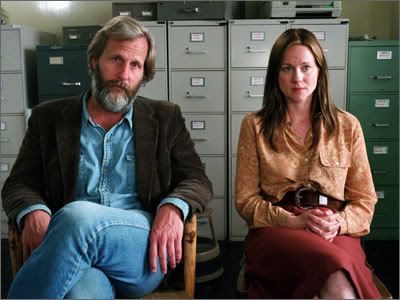
Noah Baumbach, friend of director Wes Anderson, wrote and directed the 2005 The Squid in the Whale, constructed from his own experiences and drenched in nostalgia. In a short 81 minutes we are drawn inside the insular world of a family going though a divorce and simultaneously love, hate or empathise with the different family members. The split is eminent from the very start of the film and there is not much hope of the family reconnecting fully. Instead, the film focuses on the emotional consequences of the break-up and the effects it has on the family members.

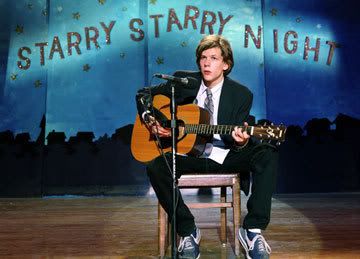
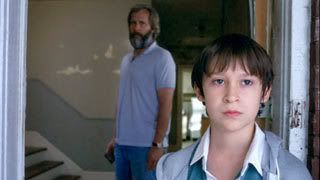
The family in question are the Berkmans, a middle-class New York family headed by two intellectual parents, the magnificent Laura Linney and Jeff Daniels. Bernard is the worst type of bourgeois intellectual, a pompous author with a couple of hefty tomes to his name and an overloaded ego. He is currently teaching a literature class at the local college, where he gets to reign supreme of his awed students. He attempts to bring this reverence back to the home, where his status as Family Patriarch is very much in effect, especially at the beginning of the film. His two children, Walt (Jesse Eisenberg) and Frank (Owen Kline) are very much in awe of their dad, with Walt especially influenced. There are a number of moments where we see Walt trying to emulate his father, talking knowledgably about books or films he’s never actually read. There’s a very funny scene where Walt’s girlfriend, Sophie, tries to discuss Kafka’s The Metamorphoses with him. Despite Walt having recommended her the story, he has never read it himself and fumbles through a conversation, before referring to it, redundantly, as “Kafkaesque“. It’s very funny and sweet and is very true in the way we tend to act around people we’re trying to impress.


Baumbach is very upfront about the character of Bernard. Lots of people have highlighted this character’s nastiness as a failing of the film. Without redemption, without a single true moment of kindness, of letting his true emotions show, the film loses something and the character becomes a clichĂ©. On the audio commentary, Baumbach recognises this (although in not so many words) and freely admits that he did not want this man to have an epiphany, to find redemption or even to seem at all like a nice guy. The screenplay was apparently based on his own experience of his parents’ divorce. If so, that means Bernard is drawn from the director’s own dad. Not an exactly attractive family portrait to paint, but true to life and perhaps we can forgive Baumbach this.


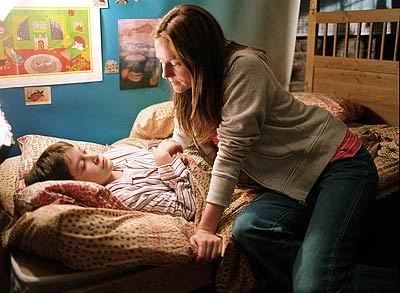
Laura Linney is the mother of the family, and it’s a very warm performance. The last film I saw Linney in was playing Jim Carrey’s wife Meryl in The Truman Show, another complex character, although the vibrant day-go colours of that film are starkly contrasted with the muted pastels of The Squid and the Whale. Whereas Meryl was a bright, sunny woman of the 50’s, Joan Berkman is much more subdued, with long tousled hair and soulful eyes. She has had affairs with other men, but we can understand her motives, her frustration and her longing to get away from Bernard. She retreats into her new relationship with Ivan (William Baldwin) and her new career as a writer (becoming more successful than her ex-husband, much to Bernard’s annoyance) but never neglects her two children. It’s a very touching look at a woman and motherhood, and you get the feeling Baumbach is fond of his own mother.

All the way though the film I was reminded of The Graduate, on which I expounded my love on here. The subject matter in the films are totally unalike, but the overall tones were very similar. The cinematography, broad shots and warm, almost sepia tones lend a humane and melancholy feel to the film, which the handheld cameras add to. There’s none of the glossiness or harshness that is so natural in today’s films. In The Graduate, music by Simon & Garfunkel filled the voids in the dialogue with a suitable sadness, in The Squid in the Whale the same method is used, this time from Bert Jansch and Lou Reed. Folksy, introspective, hopeful guitar music illustrates many moving moments throughout the film. The moment that defined my feelings toward the film was when Walt enters his mother’s house unexpectedly and we hear “Heart Like A Wheel” by the McGarrigle sisters playing on her stereo. The McGarrigles (mother and aunt of Rufus Wainwright) are probably the defining music of my childhood. My parents listened to them a lot and I grew up with their albums, so to hear their music in a film (thankfully a gentle enjoyable one such as this) was both a shock and a delight. I was able to emotionally connect with the storyline both on terms of it’s own plot and emotion, but also from my own memories and personal experiences. It was a weird, transcendent moment and it was then when I knew I really, really liked the film.

Saturday, May 12, 2007

"Spiderman 3" (2007) Sam Raimi


The central premise of Sam Raimi’s epic Spiderman 3 concerns the alien symbiote that crashes to earth and affixes itself to Tobey Maguire’s nerdy Peter Parker. This black goo influences Peter and he turns into “evil-Spidey”, illustrated in the film by a black suit and an emo fringe. Thus, the superhero is transformed, caught between his sweet, geektastic nobility and his newfound swagger, all eyeliner and hip-thrusts.

In somewhat the same way, I myself face an internal struggle when it comes to my feelings about Spidey 3. My purist self insists that it’s badly made, overlong and cheesy, while my snarky side tells me that it’s pure fun escapism. There’s no doubt that I was thoroughly entertained by most of this film (though at times I began to drift) but the snobbish side of me refuses to call it a Great Film.

My main problem is the sheer bulk of the film. In 2 ½ hours we have to grapple with three supervillians, the symbiote, Peter’s relationships with Mary Jane and Gwen Stacey and the tying up of any loose ends from the first two. Being a Spiderman movie, we have to have shots of our friendly neighbourhood you-know-what zooming through New York, a Stan Lee cameo and emotional pathos. Being a Sam Raimi movie, we need Bruce Campbell. Being the third and (most likely) final film with these actors, we need it to exceed all our expectations, thrill, amaze and move us. I’m not entirely sure it accomplished all this, but it certainly tried.

The three villains are all interesting in their own way. The Sandman (Thomas Hayden Church) has the best visuals and acting, but his story is a little sentimental even for a Spiderman film. Venom’s graphics are great, but Sam Raimi’s well-publicised dislike of the character means that he’s shoehorned in at the last minute and doesn’t get to do much (although Topher Grace makes a convincing Peter Parker negative). Harry Osborne (the wonderful James Franco) dons his father’s suit to create the best baddie; a proper backstory, likeable character and convincing acting make his scenes some of the standout moments. However, do we really need the three of them? The culmative battle scene with the four is impressive, but not worth the struggle it takes getting there, plodding through their various storylines with not enough time to fully explore any.

The alien symbiote is a strange beast, transforming our hero not into Evil Spiderman as much as Fall Out Spider-Boy. The scene in which he struts down the high street in full-on Saturday Night Fever mode is too bizarre for words. I would have much preferred a darker Spiderman. They could have easily have thrown the emo-stylin’s onto the dvd special features, but in a packed cinema the general air was that of utter bemusement.

At the screening I attended, the scenes that got the best receptions were the two humourous interludes. The first starred one of my favourite characters, editor of the Daily Bugle, J. Jonah Jameson, who got a chance to hark back to 1940’s screwball comedies for more screen time than ever before. The second scene involved Peter, M.J., a wedding ring and a hilarious French waiter, played by scene-stealer Bruce Campbell. Stan Lee’s cameo elected murmurs of approval from the audience as well, while I heard that at some screenings (although not, unfortunately, mine) the audience actually applauded Peter Parker for punching Mary-Jane. If Kirsten Dunst was a good actress, I’d care.

Following the magnificent Spiderman 2, this film is a definite step-down. Leave your sky-high expectations at the door, cheer at Bruce Campbell and enjoy the campiness of it all – just be thankful they didn’t hire Brett Ratner.

Friday, May 11, 2007

"Love is a Mix Tape" by Rob Sheffield


This post is long overdue, but as it's the weekend I thought I may as well write it up.

Catherine loves this book!

There are some books that grab you from the first glance, a startling opening sentence, paragraph or chapter. Books that from the moment you begin to read them, you know you are going to love. "Love is a Mix Tape" is one such book. From the opening paragraph, I was hooked.

"The playback: late night, Brooklyn, a pot of coffee, and a chair by the window. I'm listening to a mixtape from 1993. Nobody can hear it but me. The neighbors are asleep. The skater kids who sit on my front steps, drink beer and blast Polish hip-hop - they're gone for the night. The diner next door is closed, but the air is still full of borscht and kielbasa.

This is where I live now. A different town, a different apartment, a different year.

This mixtape is just another piece of useless junk that Renee left behind. A category that I guess tonight includes me."

The maudlin tone, the hint of doomed romance, the music and the New York setting; this book knows all the right buttons to press to make me fall in love with it, and fall I swiftly did, reading it in one sitting during the last midterm (told you this post was overdue).

Rob Sheffield is a music journo who has written for Rolling Stone and various other publications. He is the type of person who lives his life immersed in music, from his childhood playing Beatles records with his dad, to his adult life, in which he has made a living out of it. It has informed his decisions, his friends, his social status and his lovelife.

Rob met his soulmate, Renee, in a bar in Virginia. They bonded over their shared love of the band Big Star and got talking. In time, they fell deeply in love, moved in together and got married. He was a shy Irish-American nerd, she was a loud Southern girl with a flamboyant style of dress, but the love they had is something so sweet, so pure, so true that it breaks your heart as you read on, and discover that Renee died in 1997. With this memoir, Sheffield chronicles his life before, after and especially during his time with her, documenting each chapter of his life with a mix tape - selections of songs that he listened to that now conjure back memories, some harsh, some sad, some funny, some sweet.

Reading this book, I was listening to Sleater-Kinney. I remember it quite clearly, because I went over to my shelves to especially look for Dig Me Out. At one point in the book, the song "One More Hour" is written about, "the saddest Sleater Kinney song ever", in relation to Renee's funeral. I hadn't listened to the band in a long time, but this book helped me to rediscover them. There are numerous references to bands and singers throughout the memoir, some of whom I'd heard of, some who I already loved and some who I hadn't a clue about. As well as the story of one man's love for his wife, "Love is a Mix Tape" is a first hand account of the American indie scene in the early 90s. The growth of grunge, Pavement, the rise of Nirvana and Kurt's death; these are all touched upon, and it is a pleasure to read about the time period in such an approachable style.

Somewhat astonishingly, Sheffield never descends into sickening self-pity. Yes, his young wife died suddenly, but he manages to handle the sad chapters with good grace and bittersweet humour. Many places of the story had me crying, but there are laughs to be had and by the end of it I felt utterly satisfied. Throughout the course of it's short 220 pages, I became fast friends of Rob and Renee and the life they built around music.

Finally, my own personal "No real connection but they're all songs I'm digging on this Friday playlist"

1. Laura Nyro, "Time and Love"
2. The Bird and the Bee, "Fucking Boyfriend"
3. Regina Spektor, "Hotel Song"
4. Sleater Kinney, "Combat Rock"
5. Tori Amos, "Muhummad My Friend"
6. Rufus Wainwright, "Poses"
7. Fiona Apple, "Extraodinary Machine"
8. Girl Talk, "Bounce That"
9. Joanna Newsom, "Inflammatory Writ" (SHE'S ON JOOLS HOLLAND TONGHT!!!)
10. Justin Trousersnake, "What Goes Around"

Happy weekend, y'all.

Thursday, May 3, 2007

Tori Amos - "American Doll Posse"

This summary is not available. Please click here to view the post.

Sunday, April 15, 2007

Rosencrantz & Guildenstern Are Dead (1990) Tom Stoppard


Polonius: What do you read, my lord?
Hamlet: Words, words, words.

- Hamlet, William Shakespeare


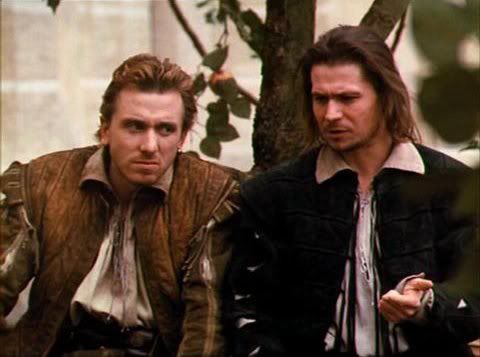
There you have the crux of Rosencrantz & Guildenstern Are Dead, a literary romp through Shakespeare in which two supporting characters from Hamlet, Rosencrantz and Guildenstern, wander through Elisnore Castle trying to find out what the hell is going on. It’s based on the play by Tom Stoppard, which in turn was based on the Bard, therefore making it almost unpenetratable to those unversed with the story of Hamlet. It’s also one of the most literary films I’ve ever seen, there is no virtually no action, only three main characters and packed with dialogue. If all this sounds a bit dense for a film experience, think again, Rosencrantz & Guildenstern Are Dead is stylish, enjoyable and very, very funny.

I never actually made it the whole way through Hamlet (some day..some day) but I was familiar enough with the story to get the main gist. Rosencrantz and Guildenstern are two of the Prince’s old friends. When Hamlet’s father, the King, is killed, his personality changes. He becomes withdrawn, moody, some say insane. In a desperate move, his mother summons Rosencrantz and Guildenstern to Denmark, to see if they can’t figure out what’s up with him. My shaky grasp on Shakespeare is at least better than the title pair, who spend the whole film trying to figure out why they’re there and what is happening. At times they drop in on a key scene from the play, but out of context it makes little sense. Most of the time they wander around the castle, a strangely constructed building which at times resembles an Escher painting. Doorways interlap, huge staircases lead to nowhere, interminably long corridors stretch on forever. There are echoing chambers where the laws of gravity don’t seem to exist. Rooms in which sheets of paper (actually the script of Hamlet) float around aimlessly; instead of reading them, Rosencrantz folds them up into paper airplanes.

If you think a film in which two men walk around a castle talking a lot sounds boring, you’d be wrong. There are jokes, wordplay, beautiful visuals and a very funny and fast-paced game of Questions.

The film would be nothing without it’s cast, especially Tim Roth and Gary Oldman, who play the title roles. Guildenstern is the sensible one, the thinker, at times stubbornly serious. Rosencrantz is the joker, the messer, a bit of a goof who refuses to sit down and figure out what the hell is going on. They compliment and accent each other, without the other, each would flounder, trapped within the confines of their own personalities. Their interactions with each other are a total delight to witness, conversation bouncing off the walls because there’s not much else to do. One of my favourite exchanges was the following:

Rosencrantz: Did you ever think of yourself as actually dead, lying in a box with a lid on it?
Guildenstern: No.
Rosencrantz:Nor do I, really. It's silly to be depressed by it. I mean, one thinks of it like being alive in a box. One keeps forgetting to take into account the fact that one is dead, which should make all the difference, shouldn't it? I mean, you'd never *know* you were in a box, would you? It would be just like you were asleep in a box. Not that I'd like to sleep in a box, mind you. Not without any air. You'd wake up dead for a start, and then where would you be? In a box. That's the bit I don't like, frankly. That's why I don't think of it. Because you'd be helpless, wouldn't you? Stuffed in a box like that. I mean, you'd be in there forever, even taking into account the fact that you're dead. It isn't a pleasant thought. Especially if you're dead, really. Ask yourself, if I asked you straight off, "I'm going to stuff you in this box. Now, would you rather be alive or dead?" naturally, you'd prefer to be alive. Life in a box is better than no life at all, I expect. You'd have a chance, at least. You could lie there thinking, "Well, at least I'm not dead. In a minute somebody is going to bang on the lid, and tell me to come out."
[bangs on lid]
Rosencrantz: "Hey you! What's your name? Come out of there!"
Guildenstern: [long pause] I think I'm going to kill you.

One of the best things about the film is the knowingness. Hamlet is a play about acting, a play about a play. Rosencrantz & Guildenstern Are Dead is a film based on a play, about a play, featuring actors playing actors, acting out a puppet show, based on a play, for actors. If all that seems a tad confusing, don’t worry. Even if you have no idea what’s going on, there’s comfort to be taken in the fact that the two main characters don’t have any idea either.

Rosencrantz: What are you playing at?
Guildenstern: Words. Words. They're all we have to go on.

My Joanna Newsom concert experience


Joanna Newsom @ The Olympia, 14th April 2007

And, Emily - I saw you last night by the river
I dreamed you were skipping little stones across the surface of the water
Frowning at the angle where they were lost, and slipped under forever,
In a mud-cloud, mica-spangled, like the sky'd been breathing on a mirror

In twenty years, when music historians try to determine the musical visionarys of our generation, it will be a great shame if Joanna Newsom doesn’t appear at the top of their list. At first glance, she seems impossibly twee, a diminuitive Calafornian harpist who sings like Lisa Simpson with a mouthful of marbles, writes 10 minute songs and uses words like “thee” and “fain” without a hint of irony. Her sophomore album was entitled Ys after a mythical city and the cover art depicted Newsom as a maiden in a renaissance painting. In this age of music downloads and Myspace, Newsom should feel quaint, out-dated, redundant.

Yet, when she takes the stage in the Olympia, almost dwarfed by her harp even with the high-heels she sports, the crowd goes insane, rolls of applause like thunder, wolf-whistles, screams, shouts of joy. How did this folkie garner such appreciation? The answer’s simple – she just writes the best songs of the new millennium. They transcend time, sneak into your head without warning, one moment whispering pledges of love underneath a tinkling harp, the next ambushing you with a full orchestral arrangement, Newsom’s voice sounding like nothing you’ve heard before. In Dublin, she doesn’t have the orchestra with her, it’s just a violinist, banjo/tambura player, drummer and herself. The Olympia is the perfect setting for a Joanna Newsom concert, a small venue, elegantly built, old fashioned.

She opens with Bridges & Balloons, an earlier song that elicts a whoop of joy from the audience before they settle down to listen attentively. It’s the same throughout the whole concert, there are no big singalongs (even those familiar with the music would find it difficult to sing along with her). In the quiet moments you can hear a pin drop, every pluck of the harpstrings ringing out clear, every tremble of the cymbals shivering throughout the auditorium.

When she finishes the first song, she introduces the band by name, giving us time to cheer them all. When this is over, she bends her head to fiddle with the harpstrings and in the silence, a man’s voice calls out “I love you Joanna!”. The audience laugh and wait to see how she will react. She doesn’t seem to have heard him, concentrating on her instrument. Then, “…aw, do you?” she sighs, a hint of a smile on her face. Her comic timing is impeccable.

The next song is the first from Ys, Emily, an ode to her astrophysicist sister who teaches her about the stars. It’s one of my favourite songs and when the first “big” moment arrives in “We've seen those mountains kneeling, felten and grey, We thought our very hearts would up and melt away” I felt a shiver. When she reaches the closest thing the song has to a chourus, the almost catchy;

That the meteorite is a source of the light
And the meteor's just what we see
And the meteoroid is a stone that's devoid of the fire that propelled it to thee

you can almost sense the crowd aching to sing along, but nobody does. It’s almost religious, the reverence she recieves.

She continues the show with the next song on Ys, Monkey and Bear. It’s the clearest storyline out of all her songs, but that doesn’t diminish the emotional wallop of the ending, in which the bear dies. Even when she’s singing her most arcane songs, lines that simply don’t make sense when read on paper, somehow her phrasing and accenting give them extra meaning, lacing the words with emotion or respect or humour. At times during the concert her phrasing is exactly like the recording, at others she twists phrases around, placing emphasis on different words. One wonders how she remembers some of these lyrics, the 17 minute Only Skin being one of the most impressive feats of memory, reeling off lines like she’s reciting Shakespeare, uncomprehensible to some, filled with truth and beauty to others.

If some of my words sound overtly respectful or awefilled, I admit that once under the Newsom spell it’s difficult to extract yourself. You can get swept up in the grandoise of the music, the classical allusions of the lyrics, but luckily, Newsom never takes herself too seriously. When she plays, she looks like she’s in a trance, lightening-speeded fingers tapping at her instrument, hollering the melody, but once a song is over she snaps out of her reverie to joke with the audience. She relates a little anecdote about her last trip to Dublin, tells us of her love for Ned Collete, her supporting act. When a mobile phone goes off, she jokes “Is there a doctor in the house?” and then, moments later while playing the introduction to Cosmia, apologies “I bet that person is really embarrassed right now. I’m sorry for laughing at you…”.

The set is a mixture of the old and the new. She plays every song from Ys and a handful of favourites from The Milk-Eyed Mender. The songs from the latter sound better than they do on the album, her voice has matured a lot since she recorded them and so has her sense of musicality.

The band are a delight. Most of the songs on Ys feature intense orchestral arrangements by Van Dyke Parks, but here they are transposed to one woman playing violin and one man playing the tambura and banjo. They do an admirable job and at times the music beautifully swells into something much more powerful than just four people playing music on a stage. Some changes are inspired, the smooth accordian on Cosmia is played as a quick, bluegrass-esque banjo solo, which is the only time during the night that the crowd appluad during a song.

When she announces “I’ve got two songs left”, groans of disapointment ripple through the building and she looks up, surprised, “It’s a long set, you guys! A long set!”. And it was. Even at only about 12 songs, she played for a long time; and every song was an experience. It’s a definite toss-up between this and Radiohead in Marlay Park for my favourite ever concert, but for the time being, Joanna’s still on constant rotation on my cd player.

Friday, April 13, 2007

"Blades of Glory" (2007) Josh Gordon/Will Speck


There's no accounting for taste, especially in matters of the funny. While one person could see an Adam Sandler film and think “Hah, this is hilarious, Adam Sandler is the comedic genius of our age”, another person could see the same film and think “Hah, I’d rather stick my head in a toaster oven than endure another minute of this.”

Comedy is a fickle thing, varying greatly from one person to the next. I was once in a room with a girl I didn’t know very well. The Simpsons were on the television and this girl didn’t laugh once. Never even cracked a smile. This was when I decided I didn’t want to know her any better.

I’m equally picky though, when it comes to comedy films. There’s movies that have me spraining my stomach on every viewing (Mean Girls, Young Frankenstein, Singin’ in the Rain) and others that leave me cold (Borat, every Adam Sandler film, every “goofy” Robin Williams film). When I first heard about Blades of Glory I wasn’t interested in seeing it. Neither the appearance of Will Ferrell or the ice-skating set up were enticing enough to warrant me spending money on a ticket for it. However, when I read that the film also starred Will Arnett, my feelings shifted slightly. Anything will Will Arnett in it can’t be that awful, right?

Quite surprisingly, it wasn’t that awful.

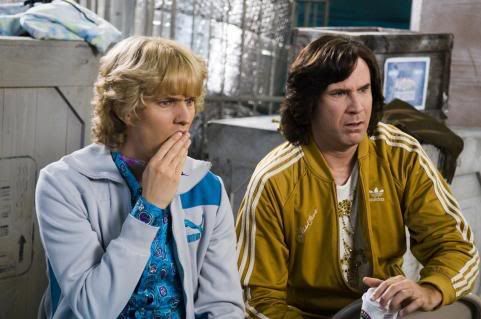
The film opens in Stockholm, where the male figure skating championships are taking place. The two main contenders are both Americans; Chazz Michael Michaels (Ferrell) is the “sex-god” of the ice-rink, a pompous wannabe cowboy who makes all the ladies go wild with his raunchy free-styling, Jimmy MacElroy (Jon Heder) is the bucktoothed wunderkid, orphaned at a young age who now dazzles with technical precision. Both men are chronic show-offs and great skaters, although their style of skating could not be any different. They’re also mortal enemies, so it’s only natural that when they tie for the gold medal, a fistfight breaks out that results in them both getting banned from competitive skating for life. Aw, shucks.

Fastforward three years and both men are squandering their life and their talents working in deadend jobs. Jimmy is working in a skate-shop, trying to dispense professional advice to bratty kids who just want him to tie their laces and Chazz is getting sloshed as the part of “evil wizard” in a low budget children’s show that resembles “Disney on Ice” on acid. It’s Jimmy who gets out of the slump first, when a loophole uncovered by his obsessive stalker Hector allows him to reenter the world of competitive skating, if he skates as part of a double. In a thrilling plot twist that will shock the audience (or, at least those who haven’t seen any trailers or promo pics for the film), the skater he ends up teaming-up with is none other than Will Ferrell! Or I should say, Chazz Michael Michaels (but then, isn’t every Will Ferrell character just an extension of Will Ferrell?)

Once this premise is set up, the film is allowed to bring on the laughs. There’s a couple of feeble subplots with one involving Ferrell’s character being a sex-addict and a love story for Heder, but everyone knows the main point of this film is to show two men faffing around on the ice together. It’s true, there is something inherantly figure skating and if you don’t find the thought of two men pirouetting around the ice in glittering, skin-tight spandex to the strains of the Flash Gordon theme amusing, you should probably dispense with this review right now.

I’m not a huge Will Ferrell fan, I actually find his constant gurning kind of irritating. But I will admit that he’s a good physical comedy actor and when he’s paired with the skinny nerdtastic moves of Jon Heder, they turn out some hilarious routines. The dance scene of Napoleon Dynamite was the only bit of that film which I enjoyed and there’s echoes of it here, as the two men begin their training for the pair figure-skating championships. With Ferrel’s bulky buffoonery and Heder’s amusing mixture of grace and awkwardness, the routines on the ice are a delight to watch. Their first public performance together, to Aerosmith’s “I Don’t Wanna Miss A Thing” is hilarious and also kind of inspiring, as they slowly win over the audience.


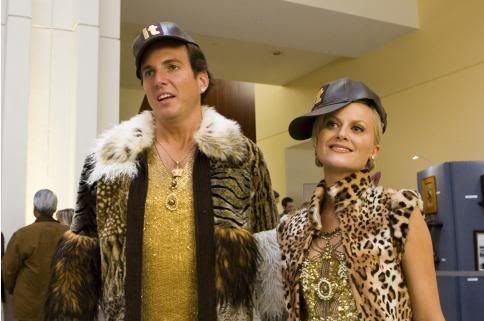
My favourite of the routines, however, was executed by the baddies of the film, a show stealing turn by Will Arnett and his real-life wife Amy Poehler. The duo play Stranz and Fairchild Van Waldenberg, a cartoonishly wicked brother and sister skating pair who are determined to take the top spot over Chazz and Jimmy. The pair dominate every scene they’re in, whether it’s a hilarious J.F.K./Marilyn
Monroe ice-skating routine, coaxing their innocent sister Katie into sleeping with Ferrell or just plain ol’ evil stuff. They mightn’t be the most realistic baddies ever created, but they provide the biggest laughs of the film.


At times the flimsy plot feels like it’s skating on thin ice (see what I did there?) and occasionlly the blades of Will Ferrell’s humour start to blunt (and again?), but you don’t go to see a film like this expecting great storylines or interesting character development. Blade of Glory mightn’t be the greatest film ever created, but by the time the wonderfully silly finale routine skates by, complete with sequined TRON outfits, I had thoroughly enjoyed myself.