Showing posts with label book. Show all posts

Sunday, September 9, 2007

My 3 problems with Atonement.


It’s facetious to judge a film without having seen it, but the near-constant barrage of reviews and media coverage that this film is generating means that I feel I basically know it already, and that I don’t care about the honesty of weighing in and giving my opinions without yet having seen it. Because I know I will see it, eventually. It’s inevitable - this is already turning into one of the year’s most talked about films. This is not one of the things that makes my list of quibbles, but it’s a point that bothers me. The first review of Atonement I came across was Emma’s, which I read with great avidity. I was curious to see what she thought of it, having just read the book myself. Later that week, the reviews began appearing in most of the Broadsheets and some more blogs. Then came the Venice Film Festival and the weight of press coverage this garnered was almost sickening. It bothered me that with so many other highly anticipated films showing, Atonement was the one that got the most buzz. It goes without saying I was thrilled when the Golden Lion for Best Film went to Ang Lee’s Lust, Caution. If the judges had awarded Atonement the top prize, I think my head might have exploded

1. Kiera Knightly.


I’m with Mark Kermode on this one. How the hell is “Ikea Knightly” an Oscar-nominee? It completely baffles. I’ll confess (albeit with glee) that I’ve only endured the first Pirates film, which I thought was “alright, not really my thing and way too long”. The second, and subsequently the third, seemed to get progressively worse and from all accounts, so did Keira’s acting. Having been marginally interesting in Bend It Like Beckham, she has simply done nothing in recent that has dazzled. Or even, you know, not made me sigh in despair. The final straw was catching her on Jonathan Ross last night. She didn’t seem entirely sane, but nor was she interesting in a kooky way. Instead she came across as needy, trying to wheedle Ross into admiting she wasn’t a bad actress. I don’t really pick fault with the casting of her as Cecilia, probably the book’s least interesting character, so much as I fault her acting at all, full stop.

2. The adaptation of the novel.

I had some major problems with the book itself, more on which later. But while reading it, I realised that this is an exceedingly odd choice to adapt for film. Ian McEwan’s excellent Enduring Love was, in my opinion, a better novel and also had a filmable plot. Atonement’s primary concern is with writing and the destructive power of the imagination, whether a writer is ever completely honest, if it is possible to atone for a terrible crime by writing about it. These themes are engaging and thoughtful, but not ones that scream “cinematic!”. The middle section, which centres on World War II, is the most filmable section of the novel, and also the part I found least engaging. Coincidence?


3. The novel itself.

I’ll admit that I read Atonement purely for the reason that there was to be a film based on it and I always prefer to read the book first rather than after. It wasn’t through lack of trying, I’d started it on two previous occasions but always gave up. There was something that didn’t quite catch me in it’s opening chapters, but this time I ploughed on and ended up rather enjoyed sections. The opening third, set in a stately English home during a sweltering pre-war summer, was well written and I found parts thrilling. The middle section, set during the war, I found formulaic. It had the façade of being well written, nicely composed sentences and McEwan’s masterful vocabulary in all it’s glory, but the sentiment seemed false to me. It was borderline boring, but not too offensive. But then came the shocker; it’s third act actually appalled me. I’m loath to reveal what exactly angered me, but it’ll suffice to say it was a cruel twists deployed by McEwan that only served to further his cleverness. I doubt he did it purely as a show-off gesture, but that’s how it read to me. The twist completely undermines everything that has come before it and plain upset me. But rethinking about it now has me conflicted; I understand that this twist was integral in driving home the central theme of the book, but at the same time I felt cheated and misled. The characters were sacrificed in favour of lamenting the fate of the author, we’ll say.

Monday, June 4, 2007

Special Topics in Calamity Physics film?

Last October I read Marisha Pessl's debut novel "Special Topics in Calamity Physics". Here's what I had to say back then,

I could call this book pretentious if I didn’t hate the word and like the book so much. Evey chapter is named after a respected novel (Brave New World, The Trial etc), there are numerous references to texts both real and imaginary during the story and it ends with a Test. It’s a very long book. It’s also very funny, clever and enjoyable. Blue Van Meer, the adolescent narrator, is very likable and tells her story with so much enthusiasm and so many unusual metaphors, the whole thing is a delight to read. It reminded me a lot of “The Basic Eight” by Daniel Handler, a book I’ve read twice this year because I love it so much. The two books have a similar narrator, an infectious smart-alecky style and a murder buried somewhere in both their plots. Handler’s book just about tops “Special Topics” purely because of length. He manages to introduce as many characters and obscure references in half the time, and is better for it.

I still prefer Handler's novel, and subsequent reading of Donna Tartt's "The Secret History" reveals both books great debt to Ms. Tartt, but I'm still curious about the forthcoming film adaptation of Special Topics.

Half Nelson-director Ryan Fleck will direct. He will also write the screenplay along with Anna Boden, with whom he worked with on Half Nelson. I didn't see that film, but it got good reviews and they're relative newcomers, which could be a positive.

The main thing I'm wondering (apart from the casting) is how they're going to adapt such a literary novel to the screen. Reading the book is like digesting an entire library on acid, while Cary Grant shouts at you.

Friday, May 11, 2007

"Love is a Mix Tape" by Rob Sheffield


This post is long overdue, but as it's the weekend I thought I may as well write it up.

Catherine loves this book!

There are some books that grab you from the first glance, a startling opening sentence, paragraph or chapter. Books that from the moment you begin to read them, you know you are going to love. "Love is a Mix Tape" is one such book. From the opening paragraph, I was hooked.

"The playback: late night, Brooklyn, a pot of coffee, and a chair by the window. I'm listening to a mixtape from 1993. Nobody can hear it but me. The neighbors are asleep. The skater kids who sit on my front steps, drink beer and blast Polish hip-hop - they're gone for the night. The diner next door is closed, but the air is still full of borscht and kielbasa.

This is where I live now. A different town, a different apartment, a different year.

This mixtape is just another piece of useless junk that Renee left behind. A category that I guess tonight includes me."

The maudlin tone, the hint of doomed romance, the music and the New York setting; this book knows all the right buttons to press to make me fall in love with it, and fall I swiftly did, reading it in one sitting during the last midterm (told you this post was overdue).

Rob Sheffield is a music journo who has written for Rolling Stone and various other publications. He is the type of person who lives his life immersed in music, from his childhood playing Beatles records with his dad, to his adult life, in which he has made a living out of it. It has informed his decisions, his friends, his social status and his lovelife.

Rob met his soulmate, Renee, in a bar in Virginia. They bonded over their shared love of the band Big Star and got talking. In time, they fell deeply in love, moved in together and got married. He was a shy Irish-American nerd, she was a loud Southern girl with a flamboyant style of dress, but the love they had is something so sweet, so pure, so true that it breaks your heart as you read on, and discover that Renee died in 1997. With this memoir, Sheffield chronicles his life before, after and especially during his time with her, documenting each chapter of his life with a mix tape - selections of songs that he listened to that now conjure back memories, some harsh, some sad, some funny, some sweet.

Reading this book, I was listening to Sleater-Kinney. I remember it quite clearly, because I went over to my shelves to especially look for Dig Me Out. At one point in the book, the song "One More Hour" is written about, "the saddest Sleater Kinney song ever", in relation to Renee's funeral. I hadn't listened to the band in a long time, but this book helped me to rediscover them. There are numerous references to bands and singers throughout the memoir, some of whom I'd heard of, some who I already loved and some who I hadn't a clue about. As well as the story of one man's love for his wife, "Love is a Mix Tape" is a first hand account of the American indie scene in the early 90s. The growth of grunge, Pavement, the rise of Nirvana and Kurt's death; these are all touched upon, and it is a pleasure to read about the time period in such an approachable style.

Somewhat astonishingly, Sheffield never descends into sickening self-pity. Yes, his young wife died suddenly, but he manages to handle the sad chapters with good grace and bittersweet humour. Many places of the story had me crying, but there are laughs to be had and by the end of it I felt utterly satisfied. Throughout the course of it's short 220 pages, I became fast friends of Rob and Renee and the life they built around music.

Finally, my own personal "No real connection but they're all songs I'm digging on this Friday playlist"

1. Laura Nyro, "Time and Love"
2. The Bird and the Bee, "Fucking Boyfriend"
3. Regina Spektor, "Hotel Song"
4. Sleater Kinney, "Combat Rock"
5. Tori Amos, "Muhummad My Friend"
6. Rufus Wainwright, "Poses"
7. Fiona Apple, "Extraodinary Machine"
8. Girl Talk, "Bounce That"
9. Joanna Newsom, "Inflammatory Writ" (SHE'S ON JOOLS HOLLAND TONGHT!!!)
10. Justin Trousersnake, "What Goes Around"

Happy weekend, y'all.

Friday, March 30, 2007

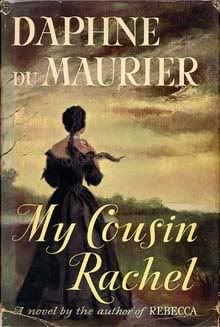
"My Cousin Rachel"

First things first; the episode titles for the 3rd series of Doctor Who (thanks Ann-Marie!)

1: Smith and Jones
2: The Shakespeare Code
3: Gridlock
4: Daleks in Manhattan (Part One)
5: Evolution of the Daleks (Part Two)
6: The Lazarus Experiment
7: 42
8: Human Nature (Part One)
9: The Family of Blood (Part Two)
10: Blink
11: Utopia
12: The Sound of Drums (Part One)
13: Last of the Time Lords (Part Two)

Preliminary thoughts:

  • Only 13 episodes?!? Ah, crap.
  • Episode Two had better not be a sub-Da Vinci Code thing. I'm warning ye, do not do that to the Bard! *shakes fist*
  • Could Episode Seven be a Douglas Adams reference? Wow, I'd love if Marvin the Paranoid Android had a guest spot.
  • And then that last one. "Last of the Time Lords?" Sounds a wee bit ominous. I guess the fact that David Tennant has signed up for series 4 dispells any worries I have in that respect, anyhow.

So don't forget! Doctor Who, BBC, 7pm, tomorrow. Be there - or be a Dalek-y type square.

Now;

My Cousin Rachel (Daphne du Maurier)

"They used to hang men at Four Turnings in the old days. Not any more though..."

Daphne du Maurier doesn't get enough credit. As regards mystery or horror writers, she seems to be left in the dust of the big boys; and when it comes to to talent of crafting a perfectly poised opening sentence, she is almost completely forgotten. It's a shame, because the opening line of My Cousin Rachel is about as perfect as you can get - it's mysterious, elegantly phrased, memorable and becomes significant later on in the story. Along with her famous "Last night I dreamt I went to Manderly again..." in Rebecca, du Maurier has got this art to down to a tee.

I didn't actually mean to start reading this book. It's just that on Monday I found myself sitting in a double free class with no homework, study or book at my disposal. I excused myself to the school's pitifully-stocked library;amid the Boyzone annuals and dusty history tomes I came across this battered Daphne du Maurier paperback and decided it would do to fill my time neatly until the bell rang for home. 80 minutes later I was deeply engrossed in the story, despite myself. I had forgotten how good du Maurier is; when I think of my favourite writers I always seem to leave her out, although I've loved Jamaica Inn, Rebecca and of course, Don't Look Now. She has a knack for creating deceptivly simple stories that chill me right to the bone. In everything I've read by her there's been a moment which has deeply disturbed me, in the best way possible. When I first read Don't Look Now, it was quite late at night and when I reached the ending (that ending...) I actually threw my copy across the room in horror and shock and revulsion. And if a writer can elict that kind of visceral response from me, I know she's a keeper.

I'll give a quick rundown of the plot. Philip Ashley is a headstrong young man in his early-20s. He grew up in the care and company of his older cousin, Ambrose - a gleefully playful and devoted relative whom the young Philip always admired. They live together in a sort of 19th century bachelor pad and their lifestyle is easy and fun, until Ambrose becomes ill and travels to Europe to regain his health. Philip begins to recieve letters from his cousin, letters describing his health, daily life in Europe and eventually, mentions of a woman always referred to as "my cousin Rachel". It transpires that this woman is a distant relative and Ambrose becomes infatuated with her. The next thing Philip hears is that they have wed and are living together in Italy. Slightly annoyed at this turn of events, Philip manages to carry on in the house by himself - until he begins to recieve letters of a different tone. Ambrose sounds unhappy, but before anything concrete can be determined, the letters stop. Almost a year later, Philip recieves a few letters from his cousin that seem to have been written by a man on the brink of madness. Shortly afterwards, Ambrose dies from a mysterious illness.

When his widow, the mysterious Rachel, arrives in Cornwall, she is quite unlike the woman Philip has been imagining,hating and privatey blaming for the death of his cousin all this time. She moves into his house, and Philip soon becomes infatuated with her...

The ending is typically ambiguous, which is ultimatly more satisfying than a clear-cut answer would be. The narrative seems simple, at times I was feeling all the emotions that Philip was, but at others I was this close to yelling at the page "No, you fool!" At times I really wanted to shake him, which added to the tension simmering all the way through this short novel.

In short: Gripping, intriguing and with an ending that will leave you trying to puzzle it all out, My Cousin Rachel is an oft-forgotten masterpiece by a talented (and neglected) writer.

====

Prague on Sunday! Kafka-land, here I come!