Can you feel the love tonight? I can. It feels like waves of love radiating through the screen, warm fuzzy pink clouds emanating from my modem. But where is it coming from? What's the source? Nope, it's not Elton John cozying up to Clinton - although that does merit a mention, just for the sheer oddness of it - but Final Girl's Hey, Internet, Stop Being Such Cynical Effing Doucebags Blog-A-Thon! I'll let the creator herself spread the gospel:
Write about a movie you adore. Write about a single movie moment you adore. A performance, an actor, a trailer you're looking forward to like crazy. Write about that time you went to the movies and what you saw made you so happy you wanted to make out with the screen. Write about that film you couldn't stop thinking about for days, and how awesome that feeling is.
In other words, for just one day, internet, don't be a cynical effing douchebag. Wear your heart on your sleeve and tell us all why you love something. That's not so hard, is it?
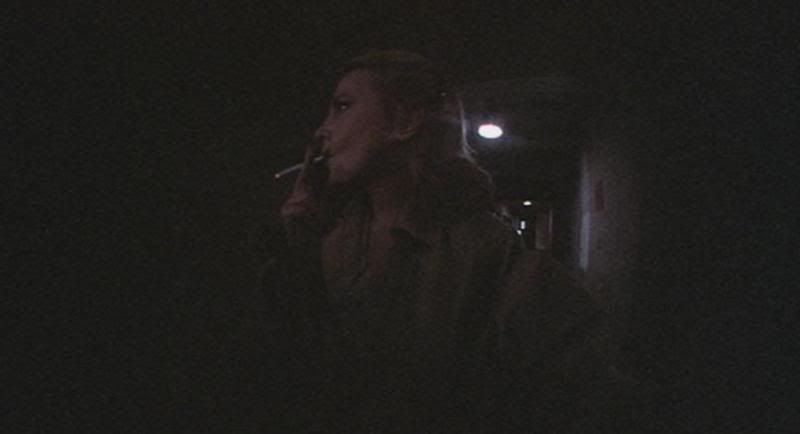
Ya got that? So, I really wanted to participate in this and so I started tossing ideas around. At first, I couldn't get Scorcese's vastly underrated Alice Doesn't Live Here Anymore (1973)out of my head, especially the scenes involving Ellen Burstyn and her son, played with brittle, precocious hilarity by Alfred Lutter. Their water-fight, the extended driving scenes, the "shoot the dog!" joke - I love their relationship in this film, because it feels so fresh, so unclichéd, so true-to-life. Sadly, I don't own it on dvd (yet!), but it did remind me of another mother/son film that I do own; Gloria (1980). In the case of John Cassavete's nod to the gangster genre, Gena Rowlands isn't actually Phil's mother, but she's as good as. When the little fella's family get killed in a brutal, yet somehow trivial, mobster killing, Gloria takes reluctant charge of him. Cue a lengthy (some would say too lengthy) series of escapades through the bars, seedy hotels and public transport of New York city. There are many pieces to love in this messy, flawed yet invigorating film, most of them having to do with Gena Rowlands. Check out her character introduction; first we see a shot of her smoking, though a keyhole
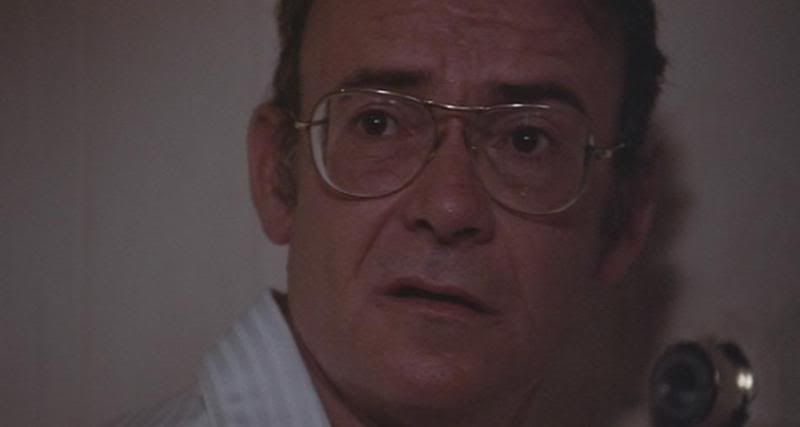
After espying Gloria, Phil's father turns to the camera, pauses for an exagerated length of time and then makes this face
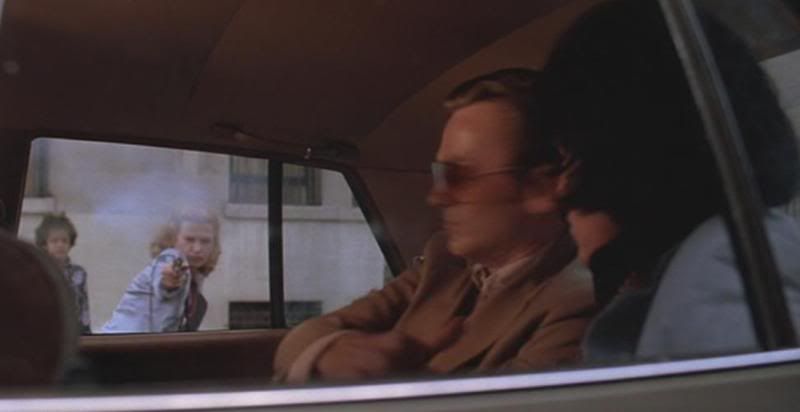
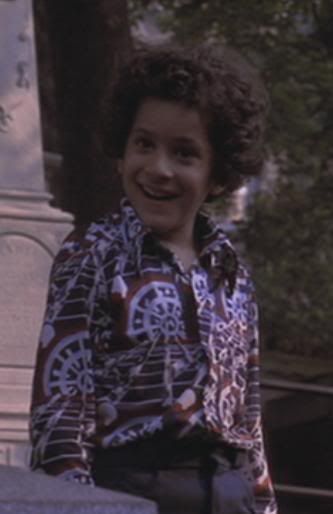
and says, "It's Gloria" in a tone of voice that nobody would ever use in real life, ever. It could possibly be described as frustration + bewilderment + exasperation + humour + the director told me to say it like we were shooting clips for the trailer = "It's GlOOriA!" I can't even adequately describe it and as I can't take sound clips, you're going to have to take my word for it. It's great though, especially as it occurs 11 minutes into the film. The exagerated line-reading would make perhaps an iota of sense if it were the very first scene, but we've just been spending time with the Dawn family. Don't worry though, they're about to get blown up in a few minutes by the gangsters who are milling about in the foyer saying things like "Nice staircase they got here" and wearing shirts like this
Ooh. Threatening.
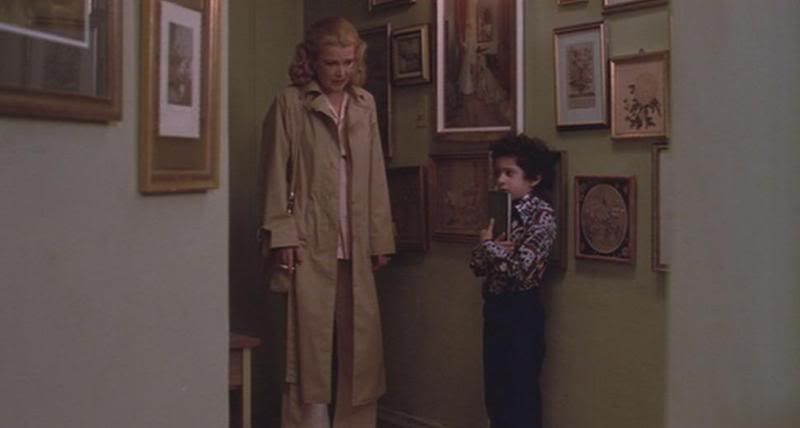
Anyway, everybody in the family is a target and so Jeri Dawn tries to foister her youngest kid, Phil, onto Gloria, who really just needed to borrow some coffee.
She isn't wild about this idea.
GLORIA: Hey, Jeri, you know I'd do anything for you. But...I don't like kids. Especially yours.
Well, too bad Gloria. Because the kid is yours. Here's where the film starts to get really good. Gloria drags Phil (literally) back to her apartment, to protect him from the mob. She's not really the most competent babysitter and Phil is hardly the most obliging child. It's the most awkward babysitting ever.
Gloria: I've got some goldfish in the bedroom. You wanna play with them? PHIL: *blank stare* GLORIA: You wanna play twenty questions? PHIL: *blank stare* GLORIA: How bout watching the tv for a while? *pause* Hey, can you understand what I'm saying to you? PHIL: Yes. GLORIA: (to her cat) Where's my boy, eh? Yeah. Come on, big fella. There's my baby. Yeah. You like him? You like cats?
From then on, the film just gets better. The plot meander along lazily, gaping plot holes are neatly side-stepped, nothing is ever fully explained, characters develop and grow before suddenly reverting back to how they were before - and I LOVE IT! Seriously, I would be perfectly happy to watch this film constantly on a loop for the rest of eternity. So, without further ado, here are my top 5 favourite things about "Gloria", in no particular order.
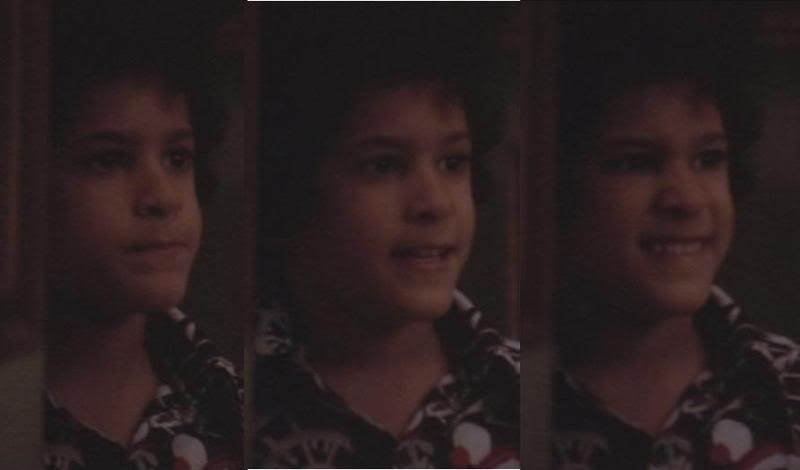
1. The many faces of Phil.
John Adames won a Razzie for this, his one and only screen appearance (he actually tied with Laurence Olivier!) and his performance is regularly siezed upon as being one of the worst examples of child acting in the history of film. I don't agree; he's supremely annoying and whiney, but that's partly because its how the character is written. He speaks every line as though it's causing him actual pain to say the words, but look at that face!
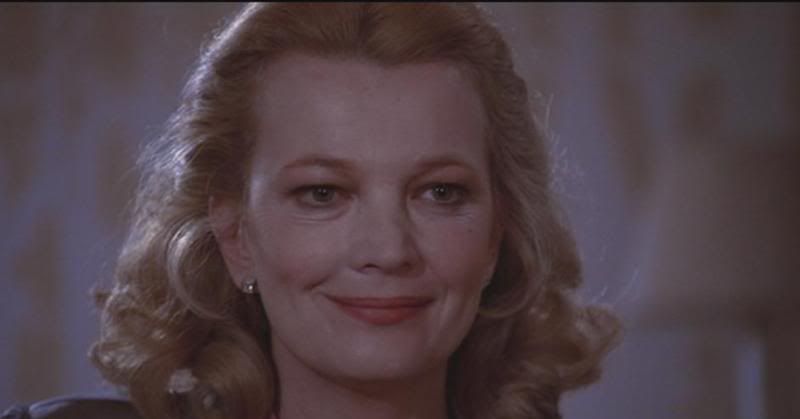
2. Gloria' s face when she sees herself on television.
3. The quasi-romance between Gloria and Phil. It's a love/hate thing, one minute he's asking her if she's ever been in love and trying to stroke her hair, the next he's all "Bye, chiquita! Bye, little sucker!". They're like an old married couple, really.
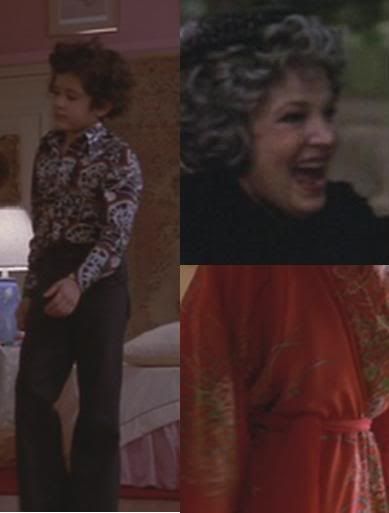
4. The clothing. We have Gloria's red satin dressing-gown, the ridiculous wig she gets landed with and the newest line from the My 'lil Pimp Clothing range.
5. Bam!
That's it.
Hey, internet! Stop being such cynical effing douchebags! Take a leaf out of Phil's book; his whole family have just been killed, he's been wearing the same awful bell-bottoms for days, his only guardian is a gangster's moll and he won a Razzie. Yet somehow, he's still happy.
Here is my contribution to Emma's The Performance that Changed My Life Blogathon. My choice is Bette Davis as Margo Channing,
For an actress who teeters ever close to scenery-chewing dominance, it is unusual that Bette Davis allows her character, the inimitable Margo Channing, to be introduced by a separate character. Rather than making a flashy entrance on her own terms, we first encounter Margo as seen through the eyes of another. She is sitting at a long dining table at a prestigious awards ceremony, Davis’ infamous heavy-lidded eyes barely bothering to scan the room. She appears disinterested and slightly amused by the whole thing.
The smooth cultured tones of Addison de Witt, which have been gently guiding us through this ceremony from the beginning of the film, introduce Margo in this fashion:
Margo Channing is the Star of the Theatre. She made her first stage appearance, at the age of four, in “Midsummer Night’s Dream”. She played a fairy and entered - quite unexpectedly - stark naked. She has been a Star ever since. Margo is a great Star. A true Star. She never was or will be anything less..
Here, Addison’s voice pauses, ever so slightly. Then,
The part for which Eve Harrington is receiving the Sarah Siddons award was intended originally for Margo Channing…
At this point the focus switches to Eve herself, played by Anne Baxter. An aged actor stands up to make a lengthy speech praising Mrs. Harrington on her talent, on her beauty and poise. The viewer, however, is still fixed on Margo Channing, who we see cradling her drink with (possibly) feigned boredom. As the young Eve stands up to collect her award, we see the members of the audience applauding with varying levels of vigour. Margo Channing, of course, does not applaud, merely regards the ceremony from under her heavy-lids. It is small gesture, but one filled with furious protest and indignant superiority. This opening scene of the 1950 classic All About Eve serves as a neat introduction for this cinematic masterpiece and also, curiously, for Bette Davis herself.
“The atmosphere is very MacBethish…what has, or is about to happen?” - Lloyd Richards (Hugh Marlowe)
Margo Channing was the first role I ever saw Davis play. Indeed, it was the first time I had ever heard of her. For years down at our house, Friday Night was Movie Night and at the end of a school week one of my parents would arrive home with a rental dvd. Here’s where I first encountered Hitchcock, Dustin Hoffman and Studio Ghibli in my formative years, but it was All About Eve that truly captured me. I was doubtful of it at first as I used to dislike black and white films (a fact which still makes me blush when I remember). It was an honest-to-God Classic Film, which I’ll admit used to turn me off, but it was also laugh-out-loud funny and bitchier than anything I’d seen coming out of Hollywood in modern times. It was also relentlessly classy; these people had integrity (although not all of them, obviously!) as well as being witty and cultured.
Even at a relatively young age I was aware that, contrary to the film’s title, Margo Channing was the centerpiece of this story, the film’s beating heart, the character whom all the others revolved around. Bette Davis, quite simply, steals every single scene she appears in, butting heads with Eve Harrington and Margo’s husband, her only worthwhile opponent being George Sanders’ snakelike Addison de Witt.
The crushing fact is that Bette Davis was Margo Channing. At the time of filming she already had two Best Actress Oscars under her belt along with a rake of nominations, but after her contract with Warner Brothers expired in 1949 it had looked like the end of her career. It was only by a lucky twist of fate that Davis ever got the role of Margo. It was originally due to go to Claudette Colbert, who had become injured. Davis had to contend for the role amid other obstacles, namely Marlene Dietrich, Tallulah Bankhead, Ingrid Bergman and Susan Hayward, who were all considered for the part. It is almost inconceivable to imagine any of these playing Margo; fine actresses though they are, they could never have matched up to the tour-de-force we are presented with. Davis brought a real fighting spirit to the part, but also a true-to-life world weariness and , touchingly, a sense of her own mortality as an actress. “You’re maudlin and full of self-pity. You’re marvellous!” - Addison deWitt ( George Sanders)
Davis’s portrayal of an ageing theatre actress slipping past her prime and in threat of being upstaged by a younger, prettier woman is rendered all the more poignant as it almost mirrors Davis’s own life, but the comparisons don’t stop there. Gary Merrill, who plays her straightforward screen-husband, Bill Sampson, fell in love with Bette for real while filming and they married soon after. He was the last of her four husbands, and the longest lasting. They split up in 1960; as Bette Davis later quipped to All About Eve screenwriter and director Joseph L. Mankiewicz at a party, “Don’t bother with the sequel - it doesn’t work out”. Margo Channing’s husky voice was also purely Bette, who had ruptured a blood vessel in her throat screaming at her ex-husband William Sherry just before the film started shooting. Her croaky rasp was deemed suitable to the character and left in the film. Bette was also just as witty and caustic as her screen persona, as the many barbed quotes attributed to her can testify. Her rival Joan Crawford was the subject of many a tongue-lashing.
“She’s the original good time that was had by all.”
“Joan Crawford has slept with every male star at MGM except Lassie.”
“One should never say bad things about the dead, only good. Joan Crawford’s dead? Good!”
Any one of those real life lines could have come from the All About Eve script, my vote for the Number 1 Screenplay Ever. Joseph L. Mankiewicz came from a true-blue classic cinema family ( his brother Herman worked on a little known film called Citizen Kane) and his script sparkles. It’s part satire on theatre industry, part Hitchcockian identity-theft thriller, part high-class comedy but with a good, strong heart. Take this exchange, between Davis and her long time friend Karen (Celeste Holm), when the two women are stuck in a broken down car during a snowstorm:
Margo: So many people - know me. I wish I did. I wish someone would tell me about me…
Karen: You’re Margo. Just - Margo.
Margo: And what is that? Besides something spelled out in lights, I mean. Besides something called temperament, which consists mostly of swooping about on a broomstick at the top of my voice…infants behave the way I do, you know. They carry on and misbehave - they’d get drunk if they knew how - when they can’t have what they want. When they feel wanted or insecure - or unloved.
Or this speech, delivered moments later:
Funny business, a woman’s career. The things you drop on your way up the ladder, so you can move faster. You’ll forget you’ll need them again when you go back to being a woman. That’s one career all women have in common - whether we like it or not - being a woman. Sooner or later we’ve all got to work at it, no matter what other careers we’ve had or wanted…
Couple these lines with the woman who could never find lasting love, even with four husbands, and you have something very tragic.
It could also be argued that Anne Baxter (who plays the part of Eve in the film) usurped Davis’ chance at the Best Actress Oscar by pressuring to get a nomination herself. This effectively split the Eve-vote in two - and the award went to Judy Holliday (somehow beating both AAE actresses and that other grande-dame, Gloria Swanson as Norma Desmond in Sunset Blvd).
Davis’ life post-Eve, after the Oscar Fiasco, wasn’t quite what she had in mind after the mild comeback she enjoyed when the film received rave reviews. For some inexplicable reason, she wasn’t offered any amazing parts and instead frittered away her considerable talent on made-for-TV movies and sub-par horror flicks. The only really notable role she took on in this time period was in the magnificently creepy Whatever Happened to Baby Jane? and which played more on her long-time feud with co-star Joan Crawford than anything deeper. It’s an enjoyably camp film, with Davis effortlessly lording over Crawford (and rightfully so) and earning yet another Oscar nod in the process, but it’s disheartening to think that this is all the old dame was rewarded with in her twilight years. She suffered from a stroke and breast cancer (which would eventually kill her, in 1989) and underwent a family dispute when her firstborn daughter, BD, published a damning memoir, My Mother’s Keeper. Looking back, it’s fair to say that Margo Channing was Bette Davis’ swansong, her final bitter act of defiance to an industry she both detested and adored. The equivalent of giving the finger to Hollywood, as it were.
“What a story. Everything but the bloodhunds snapping at her rear-end…” - Birdie (Thelma Ritter)
That’s not to say that the film is a purely melancholic affair. To the contrary, it is a comedy of the highest-pedigree. It’s most famous line (courtesy of Margo, naturally) “Fasten your seatbelts, it’s going to be a bumpy night!” was ranked 9 in the AFI’s list of best film quotations and has nearly been diluted through over-exposure. In the pivotal party scene in the film (featuring a cute cameo from up-and-comer Marilyn Monroe) positively dazzles with whiplash dialogue that is the natural precursor to programmes like Gilmore Girls. And don’t get me wrong, the part that Davis plays is undoubtedly close to the bone, but she is giving us a performance.
“Don’t get up. And please stop acting as if I were the Queen Mother” - Margo Channing (Bette Davis)
For example, witness this scene. Margo is hosting a party and her husband Bill is returning home from a trip to attend the bash. At the beginning of this short scene we see Margo joking with Birdie (the much unappreciated Thelma Ritter, who played a similar-but-equally-excellent role in Hitchcock’s Rear Window), and then learning that unbeknownst to her, Bill had already returned from her trip earlier. Baffled as to why he hasn’t come up to see her, Margo descends the stairs to realise that Bill has been preoccupied with chatting amiably to Eve. In this short scene we see her mood swing pendulously, from a humorous, light-hearted exchange with Birdie to concern for Bill. Watch her fake reticence; as she rushes down the stairs to greet Bill, only to slow herself down. Once again, her demeanour changes to sarcastic vitriol (masking a deep hurt), then fidgetting jealousy and finally, a doe-eyed dose of snark.
“Happy birthday, welcome home and we who are about to die, salute you.” - Margo Channing (Bette Davis)
I call this the “Performance That Changed My Life" with some trepidation. How, exactly, can one acting role “change a life”? Maybe if it was a spiritual role that made me convert to a new religion or an inspirational role that significantly changed my path in life. I did try to come up with something akin to these type of life-changing moments, but came up with nothing. So I had to delve further into what “life changing” could construe. Finally, I hit upon my answer. All About Eve is a film that has stayed with me for a long time, ever since I saw it years and years ago. It was probably the first classic film that I honestly loved and actively engaged with; and the role of Margo Channing is integral to the movie. I consequently began to think a lot about this film, it’s themes of backstage betrayal, friendship, acting and lies. I pondered the similarities between Bette Davis and Margo Channing. It's almost a postmodern part, Davis playing a hieghtened version of herself, not waiting for the audience to "get" the joke. I really grappled with the role, struggled to break it down. It was something to get my teeth into. I longed to discuss it. To find the heart of it. I wanted, basically, to know it.
Bette Davis as Margo Channing was the first part that I ever felt this intrigued by. I’m not sure if it would be hyperbolic to claim that without All About Eve I wouldn’t be as interested in cinema as I am, but heck, let’s just go wild.
So let us raise an eyebrow and tip our martinis in thanks to Margo Channing.
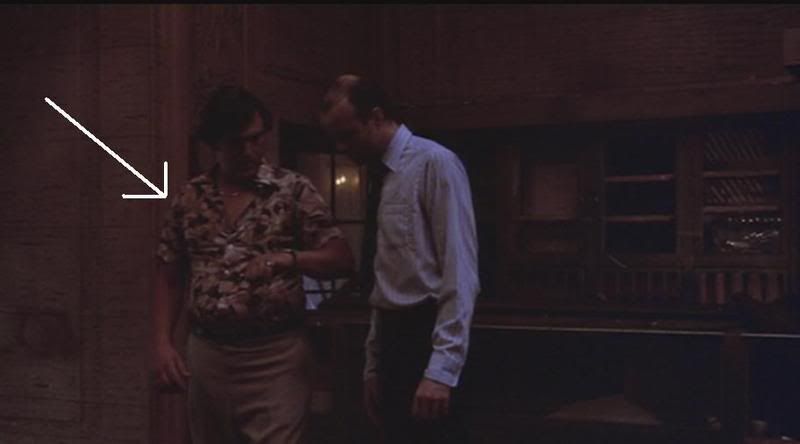 Ooh. Threatening.
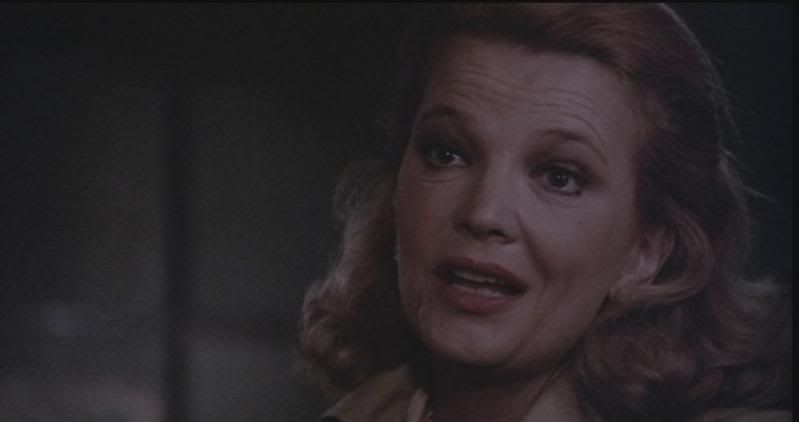 She isn't wild about this idea.